HE ASKED FOR 15 MINUTES. THE CONVERSATION LASTED 90 — AND OPENED DOORS AROUND THE WORLD.
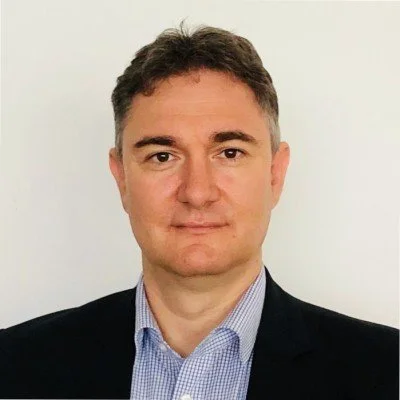
Lubos Marek reached out to a prominent medical expert and asked for 15 minutes of his time.
The conversation lasted an hour and a half.
By the end, the expert was helping connect Lubos's initiative with physicians in Singapore, Stockholm, and London.
One conversation had opened doors in three countries.
For someone with 20 years of experience in the pharmaceutical industry, this might not sound particularly surprising.
Except Lubos himself acknowledged that an earlier version of him would have struggled to imagine making that approach.
Not because he lacked expertise.
Because he'd spent years believing that access to influential people depended on having the right corporate title, connections, and permission.
That belief was changing.
BUT THAT'S NOT WHERE THE STORY STARTED.
When Lubos and I began working together, he was accustomed to pursuing opportunities the way many accomplished executives do.
He looked at available positions.
Worked with recruiters and headhunters.
Prepared his credentials.
And considered which roles matched his experience.
It was a reasonable approach.
But it also meant he was waiting for someone else to define the opportunity.
Lubos had spent two decades developing expertise, relationships, and a deep understanding of the pharmaceutical industry.
Yet when he considered his next move, he was still largely thinking in terms of existing jobs.
His experience was extensive. His sense of what he could do with it was unnecessarily limited.
THE FIRST CHANGE WAS HOW HE PRESENTED HIS VALUE.
A central part of our work involved helping Lubos articulate something more compelling than his qualifications.
What problems could he solve?
For whom?
And why was his particular combination of experience valuable?
As he described one of the most important lessons:
"You need to understand what the pain is and then how you can solve this kind of a pain."
We worked on developing that proposition and communicating it clearly to people who could recognize its value.
But there was another shift.
Lubos had been accustomed to preparing meticulously.
Now he began understanding that he didn't need a perfect presentation before starting a conversation.
The conversation itself could help improve his thinking.
A question could reveal a gap.
An objection could strengthen his proposition.
Even a rejection could lead to a useful introduction.
He stopped treating every interaction as something he had to win.
And began treating it as an opportunity to learn, contribute, and move forward.
THEN HE STARTED APPROACHING PEOPLE HE ONCE CONSIDERED OUT OF REACH.
Lubos described how much his thinking about access had changed.
Earlier in his career, approaching a prominent scientist or medical expert might have required formal introductions and established corporate channels.
Without those advantages, he might have hesitated.
Now he was contacting influential people directly.
He even described reaching out to political leaders through social media.
His reasoning had become refreshingly simple.
If someone didn't respond, what had he really lost?
More importantly, if he had something genuinely valuable to discuss, why assume they wouldn't want to hear it?
That change in thinking led to the 90-minute conversation with the medical expert.
Lubos wasn't asking someone important to give him a chance.
He was bringing forward an idea worth discussing.
And the expert responded by helping extend the conversation to other physicians internationally.
The same man who once depended on corporate channels was now opening doors through the strength of his own proposition.
HE STOPPED MEASURING SUCCESS BY HOW OFTEN HE HEARD YES.
Perhaps the most revealing part of Lubos's transformation was how he began thinking about rejection.
He no longer viewed a negative response as evidence that he'd aimed too high.
He saw it as part of pursuing bigger opportunities.
As he put it:
"If your success is I'm going to play only the matches which I'm going to win ... then you are not playing hard enough."
For an executive accustomed to succeeding through careful preparation and proven performance, that was a significant change.
He was becoming willing to have conversations without knowing how they'd end.
To approach people who might say no.
And to pursue opportunities that didn't come with a ready-made job description.
His career was no longer confined to what appeared in the market.
He was actively developing relationships and initiatives around problems he believed he could help solve.
And the possibilities were expanding.
SOMETIMES THE BIGGEST BARRIER IS THE PERMISSION YOU'RE WAITING FOR.
Lubos didn't suddenly acquire 20 years of expertise.
He already had it.
He didn't need a more impressive title to make his experience valuable.
What changed was his willingness to bring that value directly to people who could use it.
And once he did, conversations that previously seemed inaccessible began producing real opportunities.
Maybe you've spent years succeeding inside established organizations.
You know your field. You have the experience. You've earned your credibility.
But when it comes to approaching someone outside your usual circle, you hesitate.
Who am I to contact that person?
Why would they want to speak with me?
What if they say no?
Lubos discovered that the more important question was: What if I have something they actually need?
That's why I don't begin with a predetermined solution.
I begin by understanding your situation.
The Career Strategy Session is a 45-minute conversation designed to do exactly that.
Bring me the situation, opportunity, or decision you're wrestling with.
We'll examine what's happening, identify the underlying issue, and determine what needs to change.