HE TURNED DOWN THE SAFE EXECUTIVE JOB. AND FOUND THE OPPORTUNITY HE ACTUALLY WANTED.
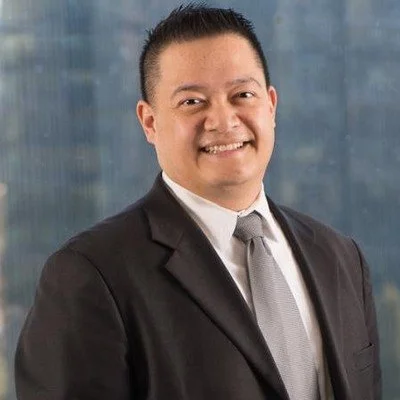
Miguel San Mateo had an opportunity many executives would have accepted without hesitation.
An in-house Chief Information Security Officer position with a healthcare organization.
A steady paycheck.
A commute of just 15 minutes.
The security of a conventional executive role.
And he turned it down.
Not because he didn't need the money.
But because he'd come to recognize something important about himself.
The job offered security. It didn't offer the kind of future he wanted to build.
Instead, Miguel accepted a more entrepreneurial cybersecurity leadership opportunity, helping establish and expand a consulting firm's West Coast practice.
It was a chance to combine his executive experience with the opportunity to build something new.
But getting there required him to let go of a very specific idea of what success was supposed to look like.
BUT THAT'S NOT WHERE THE STORY STARTED.
Before Miguel and I began working together, he'd spent approximately two years leading a startup as its CEO.
It was an unusual chapter in a career built around cybersecurity, information security, and management consulting.
In fact, he'd originally interviewed with the company for a CISO position.
After meeting with its board, he became its CEO instead.
The experience revealed something important about Miguel.
He wasn't simply a cybersecurity executive.
He was a builder.
Someone who enjoyed creating opportunities, developing businesses, and putting his leadership experience to work in new ways.
But when that chapter ended, he found himself at a crossroads.
Should he pursue another startup CEO role?
Return to a traditional cybersecurity leadership position?
Or find something else entirely?
Initially, Miguel became fixated on recreating his previous success.
"My mindset was so tunnel vision into I need to be a CEO of another startup that's gonna be a unicorn."
He'd done it once.
Why couldn't he do it again?
The problem wasn't his ambition. It was that he'd begun treating one particular outcome as the only acceptable version of success.
HE DIDN'T NEED TO START OVER. HE NEEDED TO SEE HIS EXPERIENCE DIFFERENTLY.
When we began working together, one of the most important shifts involved broadening how Miguel thought about his professional possibilities.
He didn't have to choose between returning to cybersecurity and continuing to pursue his entrepreneurial ambitions.
Those two parts of his experience could work together.
As he described the biggest positive change from our work:
"Changing my mindset really ... and providing me a structure to reengage professionally."
Instead of focusing exclusively on another CEO title, Miguel began considering where his combined strengths could create the most value.
He understood cybersecurity at the executive level.
He knew how to advise organizations and build security functions.
And he had the entrepreneurial instincts to help grow a business rather than simply operate within one.
A different kind of opportunity began to take shape.
A consulting firm was looking to expand its presence on the West Coast.
Miguel could provide senior cybersecurity expertise to businesses that couldn't justify a full-time CISO.
And he could help build the firm's regional practice.
It wasn't another startup CEO position.
But it offered something he'd been searching for all along: the chance to build.
THEN CAME THE DECISION THAT TESTED EVERYTHING.
Miguel had another opportunity available to him.
A traditional, in-house CISO position at a healthcare organization.
On paper, it had plenty going for it.
Predictable hours.
A steady paycheck.
An easy commute.
The kind of stability that can be particularly attractive when you have a family to support.
The consulting opportunity was different.
It carried more uncertainty.
Potential travel.
The challenge of helping establish a practice in a new market.
But it also offered greater financial potential and the chance to create something.
Miguel didn't make the decision impulsively.
He spent nearly two months weighing his options.
He considered the risks, examined how he could manage them, and asked himself a deceptively simple question.
Which opportunity would actually make him want to get up in the morning?
The conventional role offered security.
The consulting opportunity offered a professional future he was excited to build.
As Miguel put it:
"This was worth the risk."
He turned down the healthcare position.
And committed to the consulting opportunity.
HE WASN'T JUST TAKING A POSITION. HE WAS HELPING BUILD A BUSINESS.
When Miguel joined the consulting firm, its West Coast presence was tiny.
Before he arrived, there was just one person in San Francisco.
Miguel became the second.
Together, they would help establish and expand the firm's presence across the region.
It was an opportunity to apply his cybersecurity expertise, draw on his executive relationships, and exercise the entrepreneurial judgment he'd developed throughout his career.
Rather than simply filling an established position, he could help shape what the business would become.
The role brought together capabilities that had previously seemed to point him in different directions.
And that was precisely what made it so attractive.
He hadn't abandoned his previous experience. He'd found a way to bring more of it to the table.
THE RIGHT NEXT MOVE ISN'T ALWAYS THE MOST OBVIOUS ONE.
Miguel's story illustrates something experienced executives sometimes overlook.
Your next career move doesn't have to look like your last one.
A former CEO doesn't necessarily need another CEO title.
An accomplished specialist doesn't have to remain confined to a conventional function.
And an attractive offer isn't automatically the right offer.
Sometimes the breakthrough comes from recognizing that the experience you've accumulated across different chapters of your career can be combined in ways you hadn't previously considered.
Miguel didn't start over.
He didn't abandon his expertise.
He stopped allowing one particular definition of success to determine what was possible.
And that gave him the confidence to pursue an opportunity that better reflected both his capabilities and his ambitions.
Maybe you're facing a similar decision.
You've accumulated experience, credibility, and professional accomplishments.
But the obvious next step doesn't excite you.
Or you're trying to recreate a previous success without questioning whether it's still what you want.
The question may not be how to get back to where you were. It may be what your experience now makes possible.
That's why I don't begin with a predetermined solution.
I begin by understanding your situation.
The Career Strategy Session is a 45-minute conversation designed to do exactly that.
Bring me the situation, opportunity, or decision you're wrestling with.
We'll examine what's happening, identify the underlying issue, and determine what needs to change.